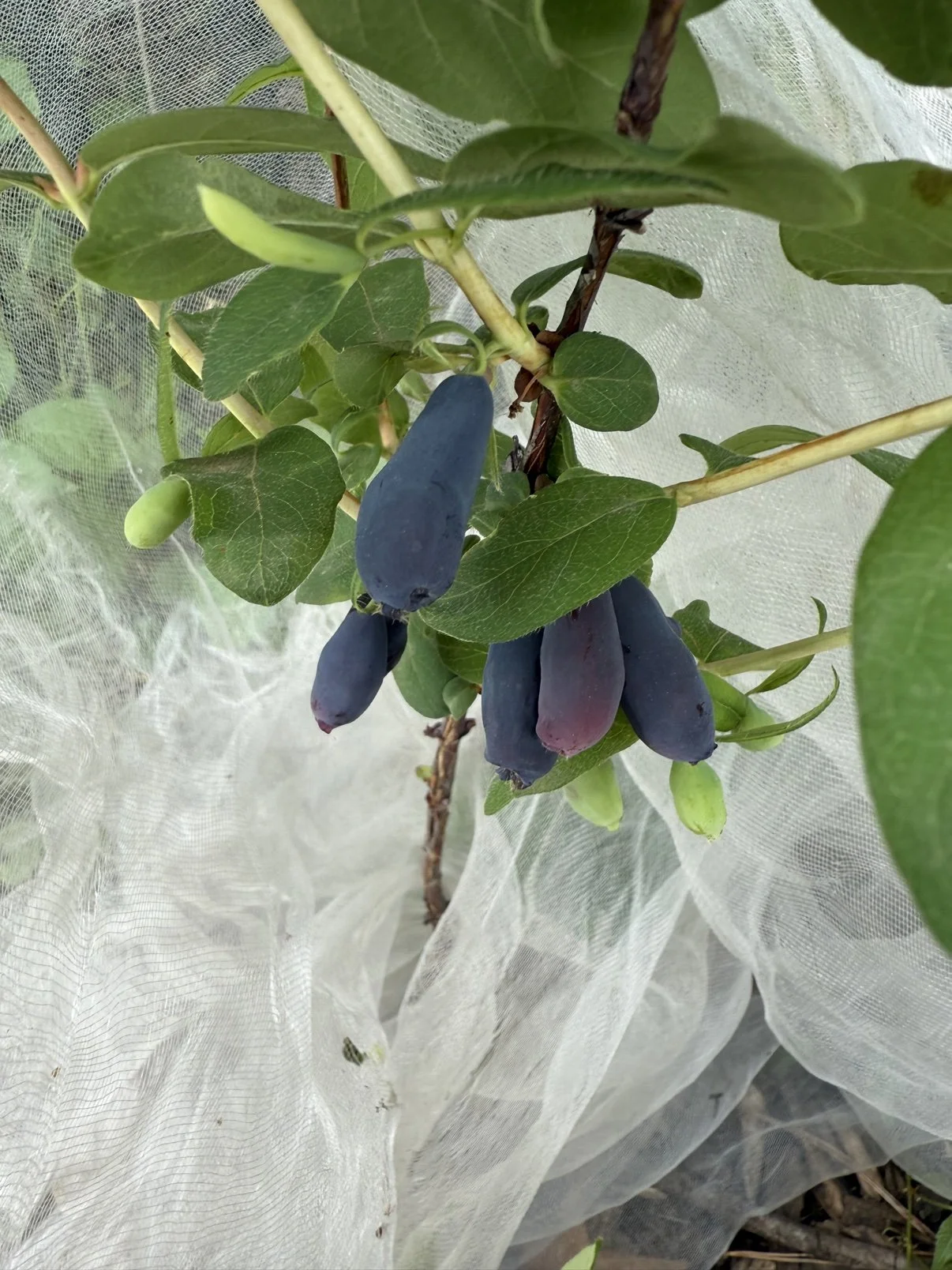
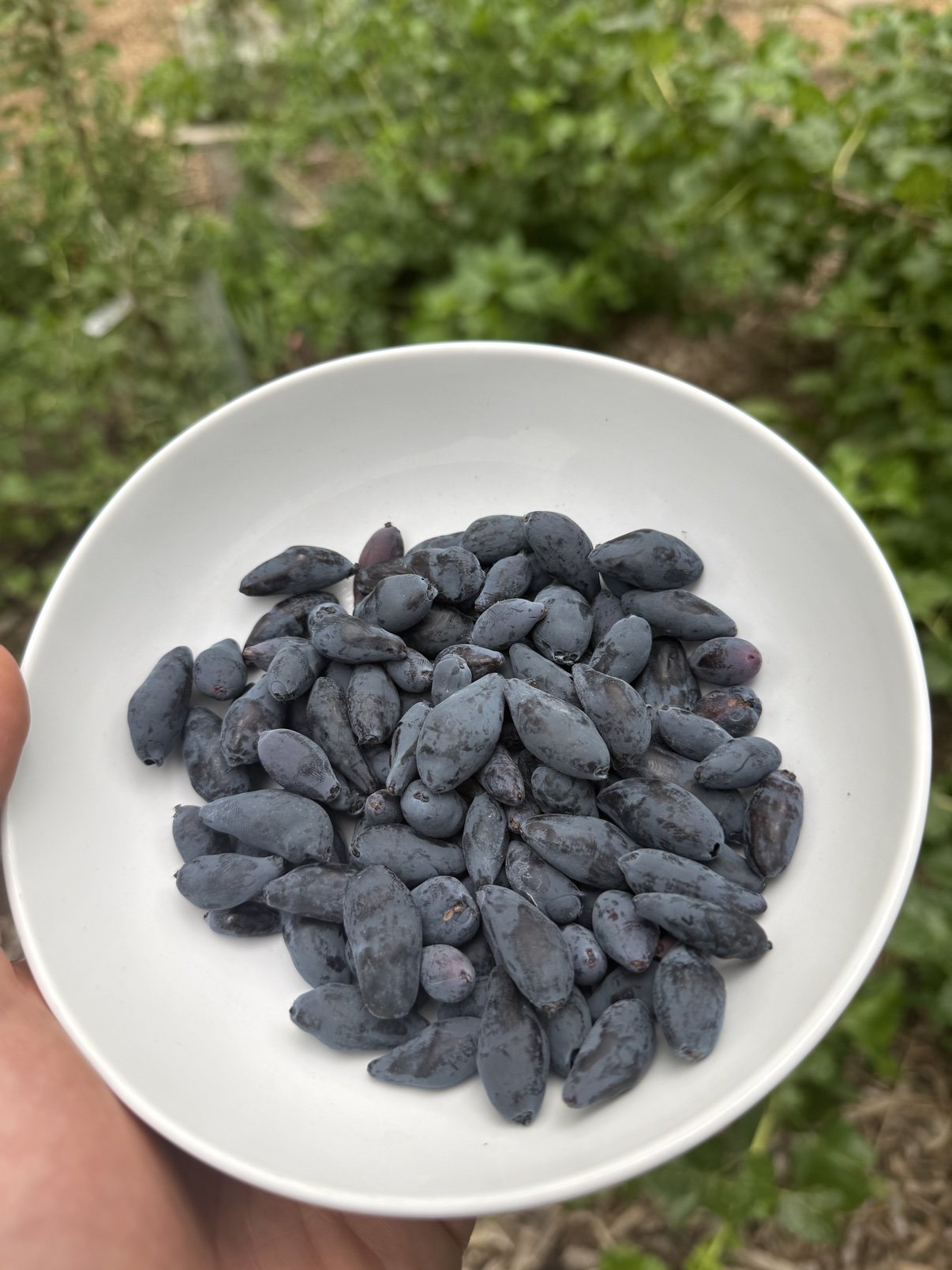
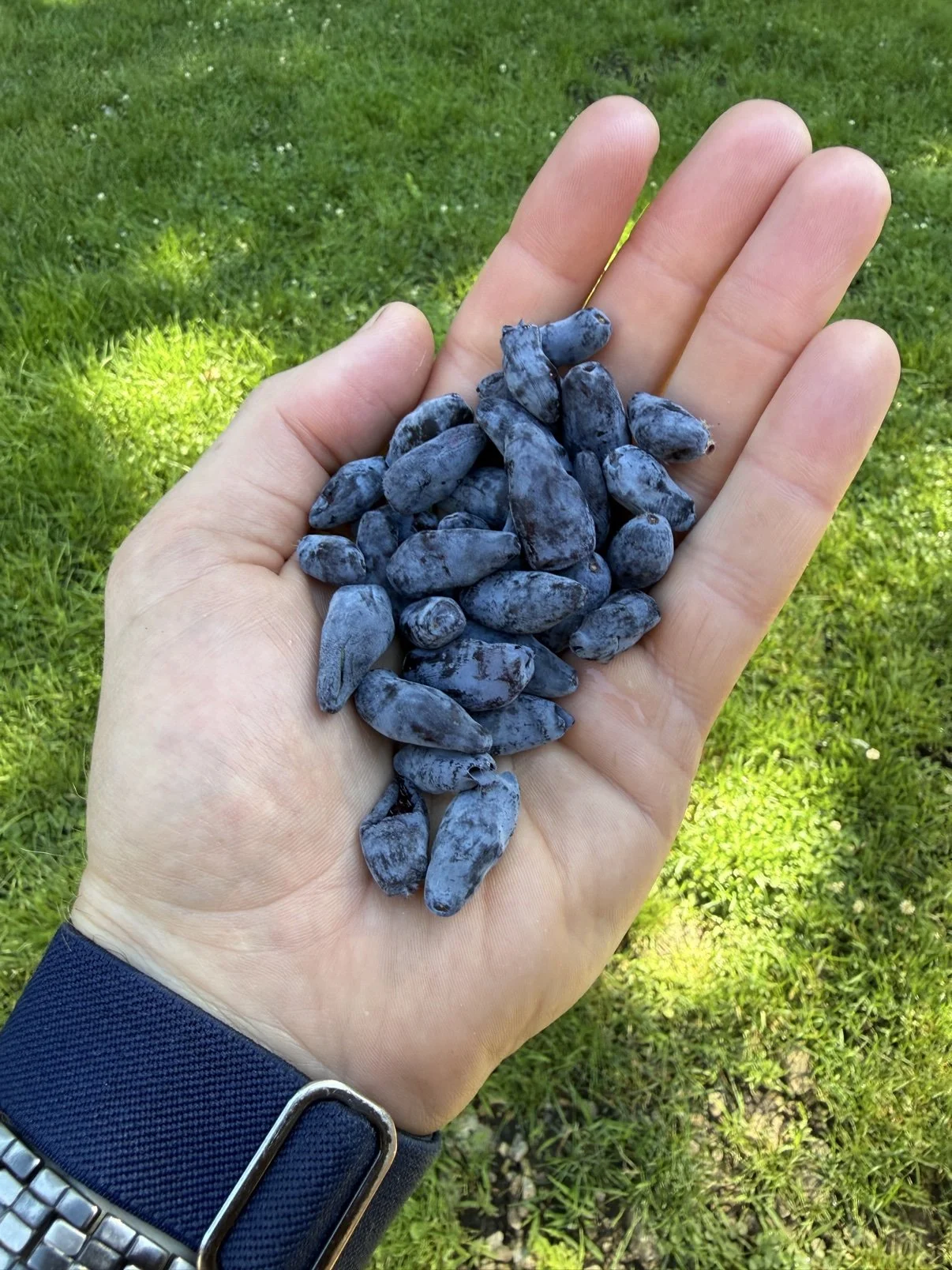
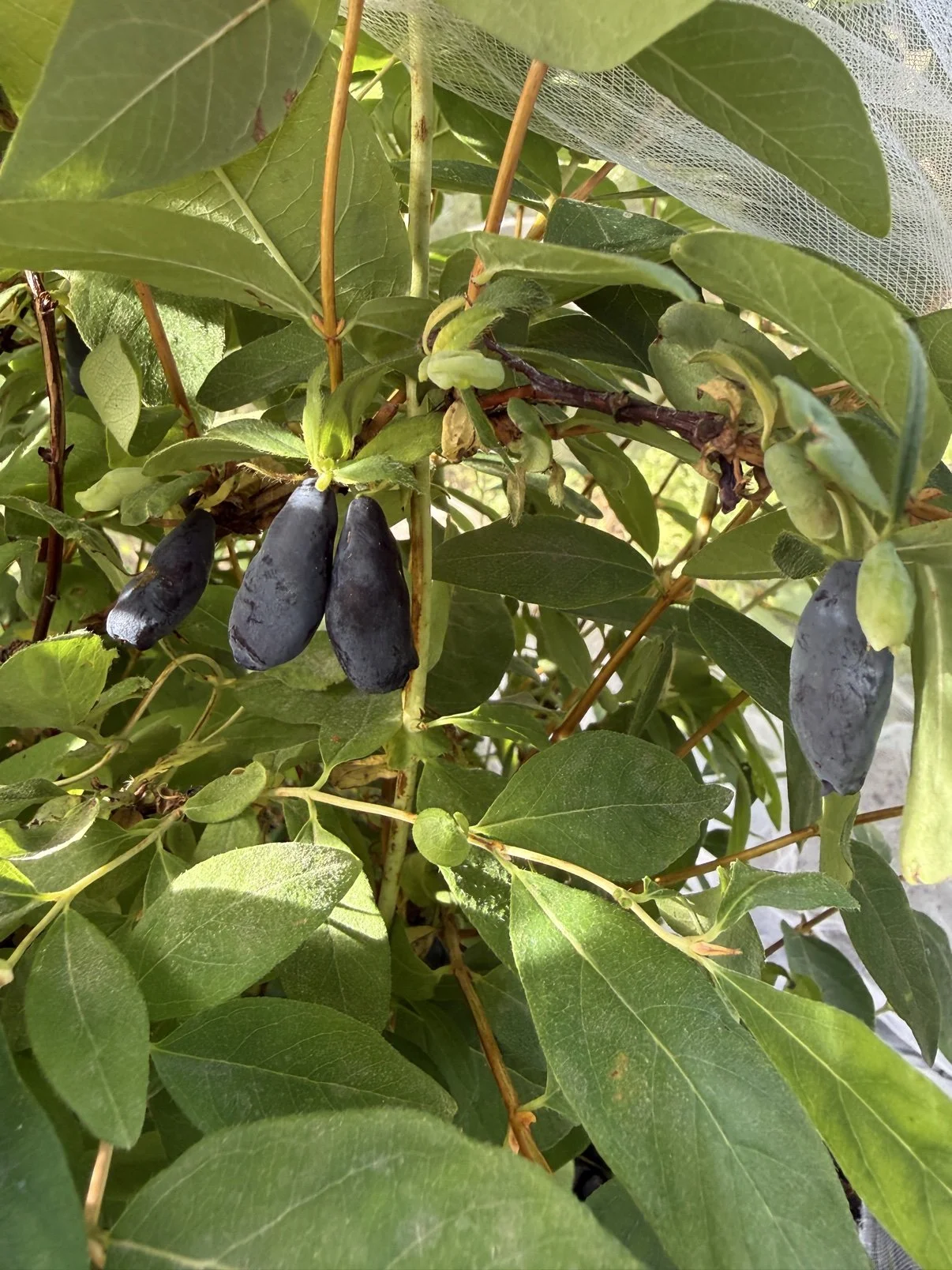
What is a honeyberry?
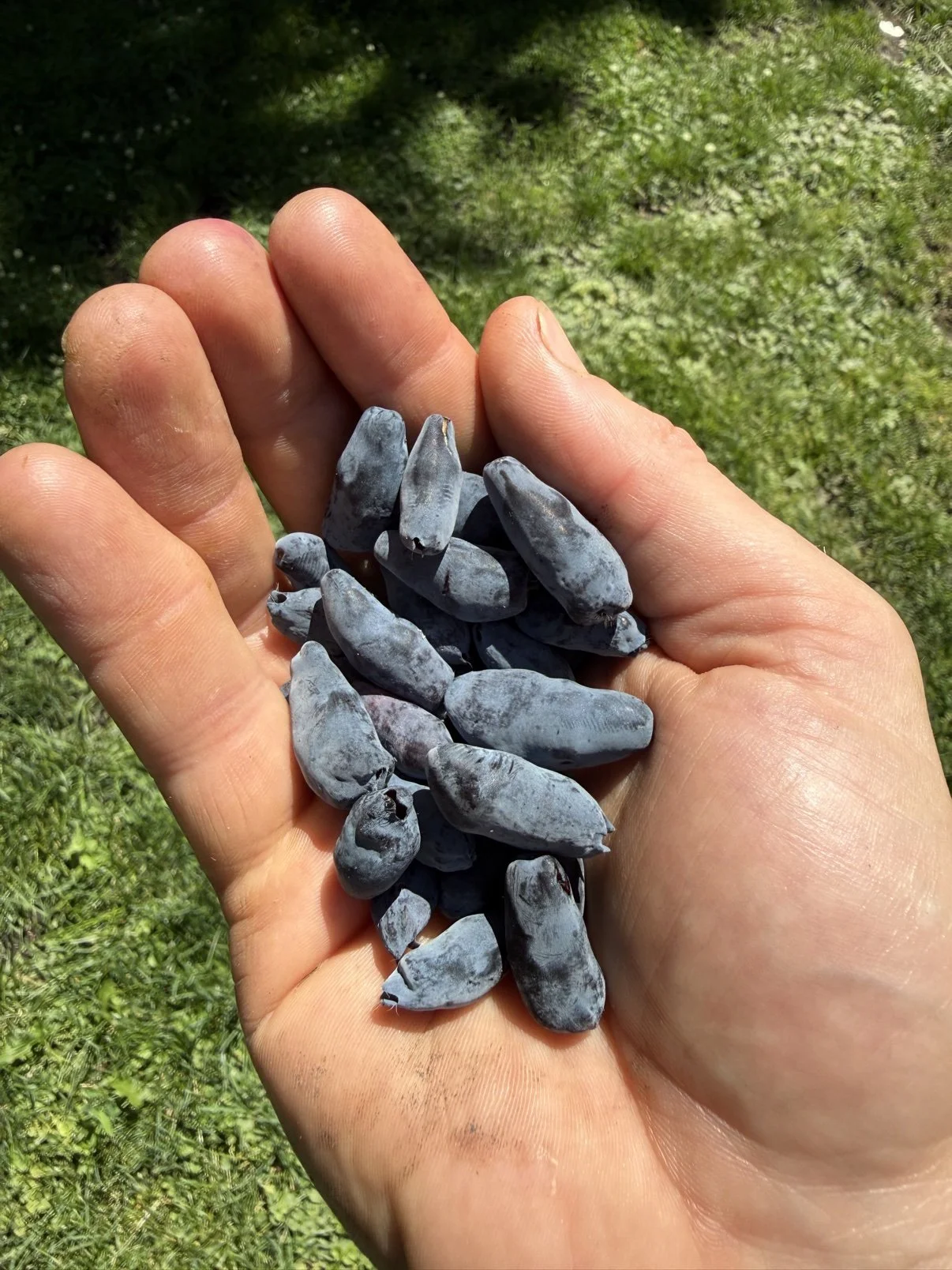
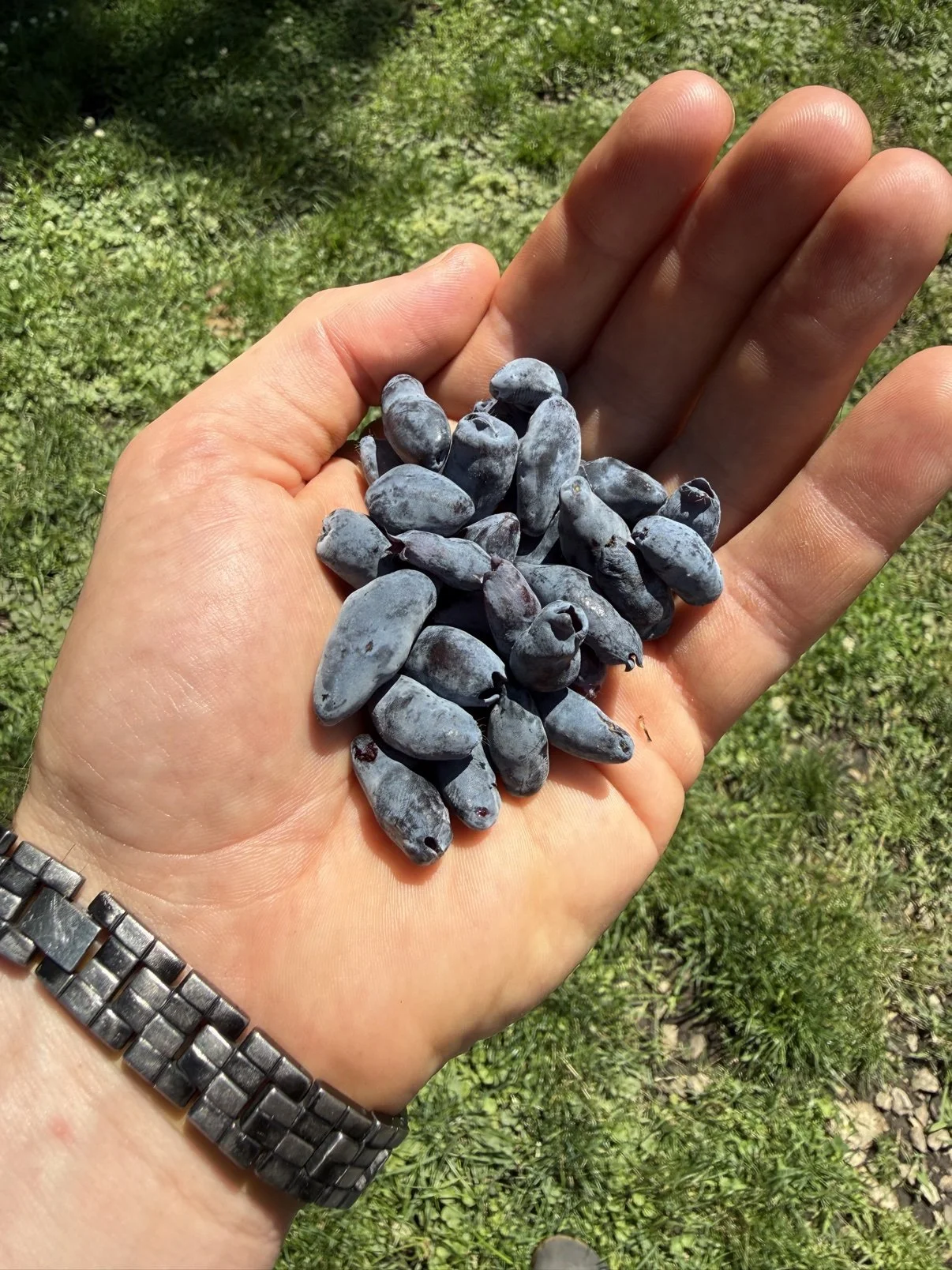
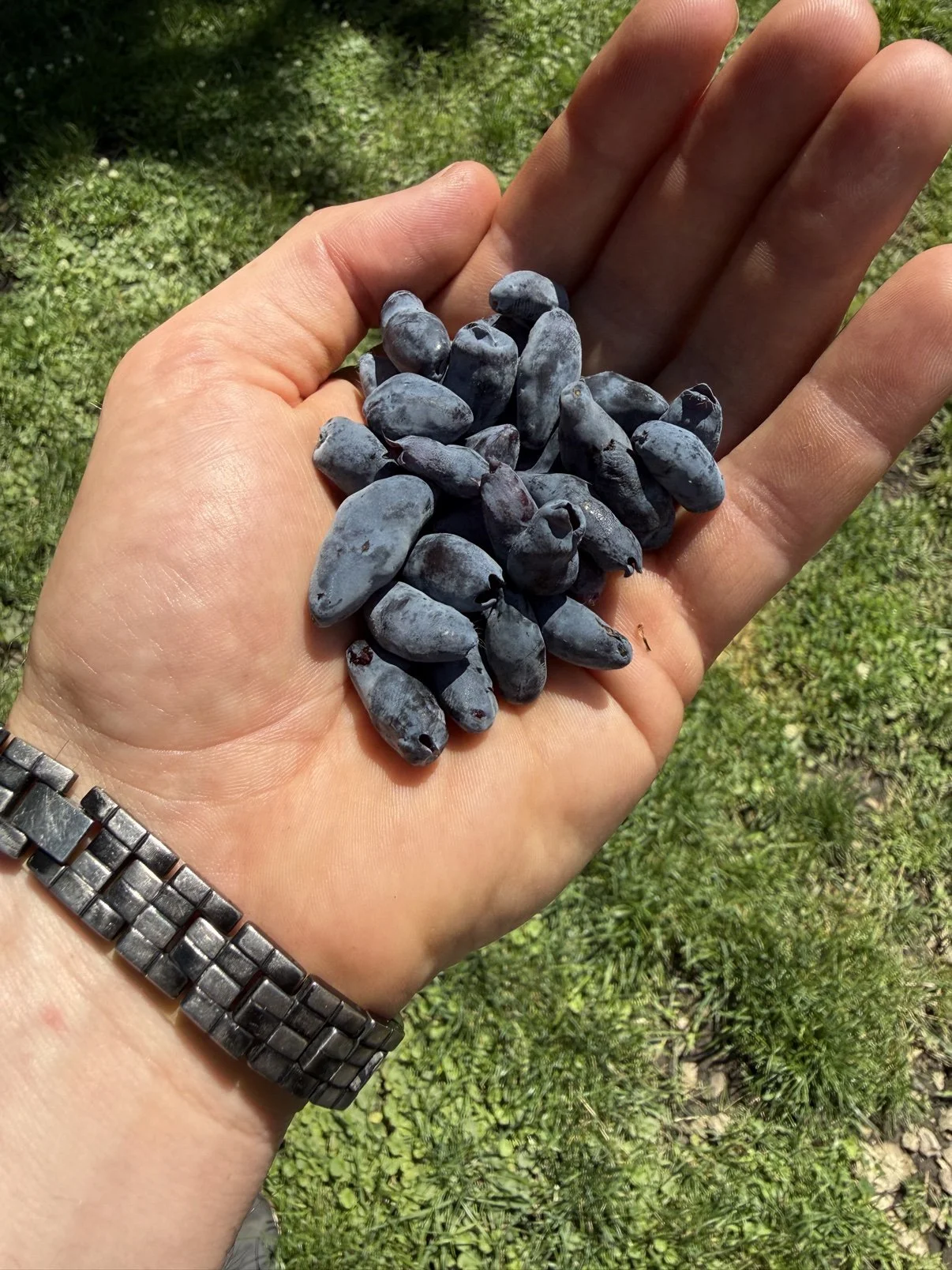
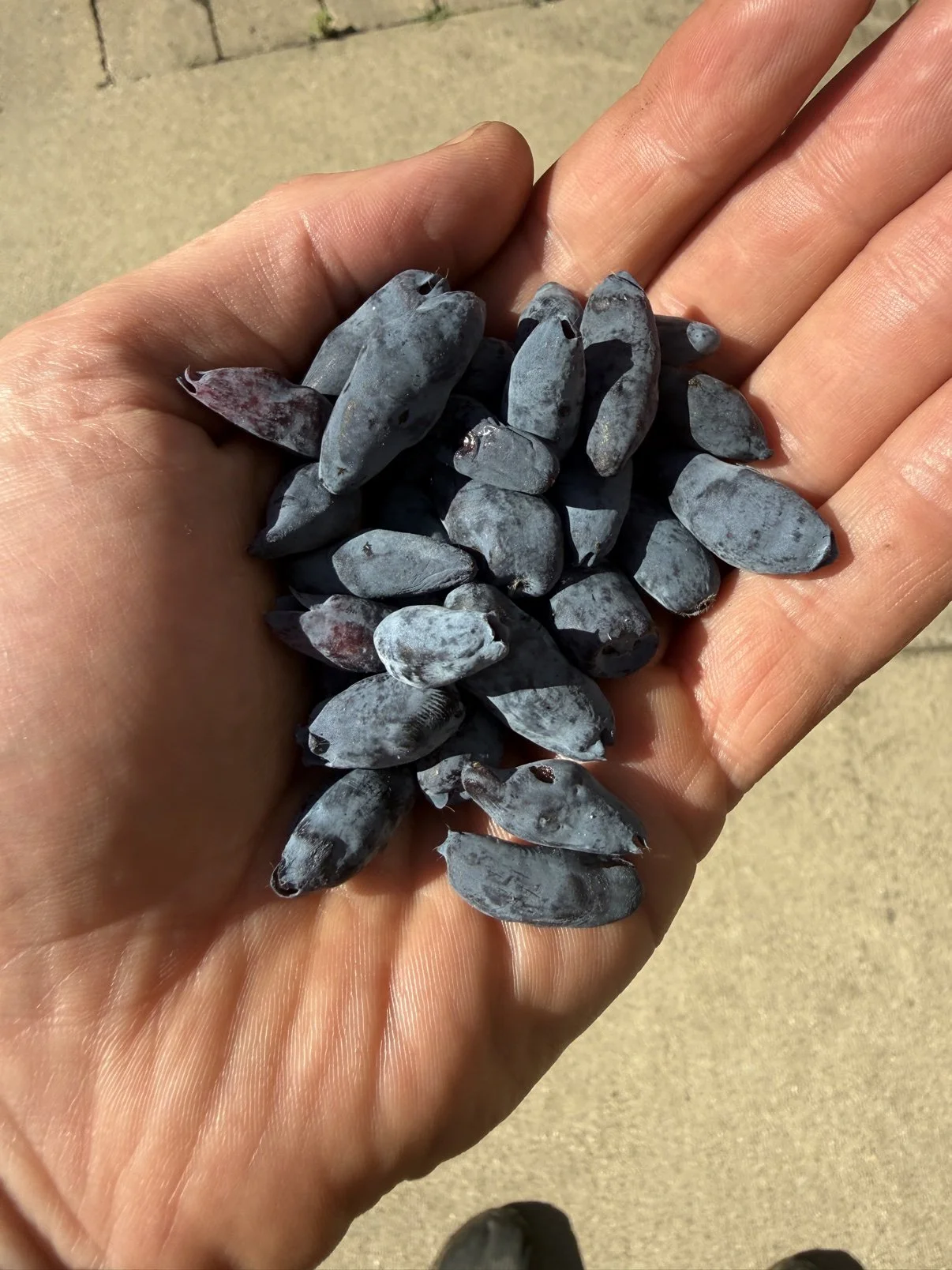
An elongated blue berry from the honeysuckle family — not a blueberry. The flavor sits between blueberry and raspberry with a tart snap. It ripens in mid-June, the first fruit of our season.
The Ainu people of Hokkaido, Japan, called the haskap the fruit of longevity and valued it for centuries. Japan bred the sweet varieties the world grows today, and in Hokkaido the berry became a regional icon — jams, wine, juice, and sweets. In Japan, the honeyberry got in the door on its story, then won on flavor. We're betting America does the same.
Get First Access
Join our email list and you'll hear first about the harvest, u-pick days, and the first honeyberry products.
Built for Northern Illinois
Honeyberries shrug off −40°F winters and late spring frosts, carry low pest pressure, and a single bush can produce for 30 years or more. It's a perennial shrub built for this place — and for the long haul.
Three acres of honeyberries (also called haskap) in Lee County, Illinois — one of the largest single plantings in the country, in a crop with fewer than 500 acres planted in the entire United States.
Our planting is mostly the Boreal series, bred at the University of Saskatchewan for northern winters: Boreal Blizzard, some of the largest honeyberries grown anywhere; Boreal Beauty, a late-ripening breakthrough; and Boreal Beast, the flavor standout that pollinates the other two. They ripen in sequence — Blizzard, then Beast, then Beauty — which stretches our harvest window.
Honeyberry questions
Is a haskap the same as a honeyberry?
Yes. Haskap is the berry's Japanese name, from the Ainu language of Hokkaido. Honeyberry is the common North American name.
When are honeyberries ripe?
Mid-June in Northern Illinois — among the very first fruit of the year.
What do they taste like?
Blueberry meets raspberry, sweet-tart, with deep purple-red juice.
Can I buy honeyberries now?
Not yet — our bushes are young. The first harvest goes to our email list first. In the meantime, our spiced nuts and ferments are in the shop.
What varieties do you grow?
Primarily the Boreal series — Boreal Blizzard, Boreal Beauty, and Boreal Beast — developed by the University of Saskatchewan fruit program for cold northern climates and large, flavorful fruit.